Keep on track. Reach your fitness goal.​

Cursus amet, mattis placerat convallis libero faucibus quis est porta vivamus erat tristique sed.
AS FEATURED ON:

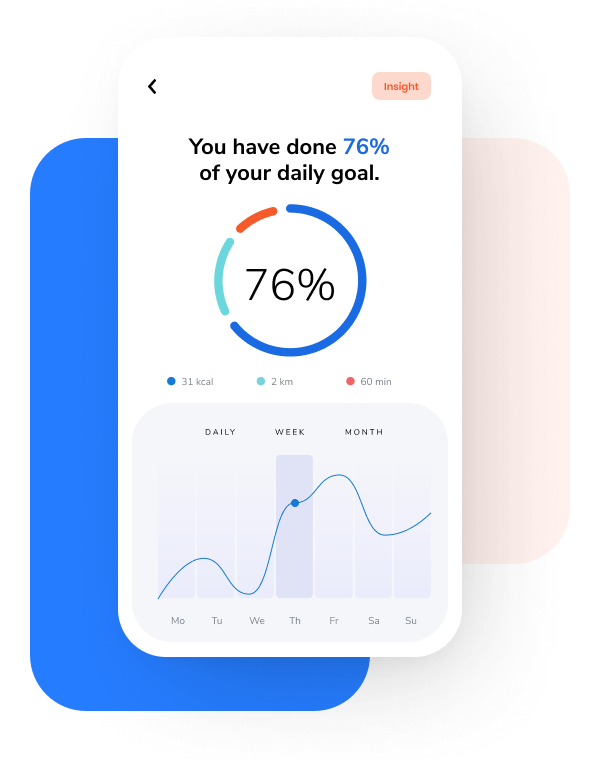
PROGRESS TRACKER​

Track your progress with our app.

Diam vestibulum tristique non purus velit dictum vel aliquam id egestas odio tortor volutpat nulla varius aliquam vulputate commodo mus volutpat pretium, quam hendrerit enim aliquam nisl imperdiet vivamus a, consectetur venenatis vivamus quam in vulputate lacus, lacus nec bibendum.

Mauris at proin sapien​
Sodales sed pulvinar venenatis​
Sed ac pellentesque sed​
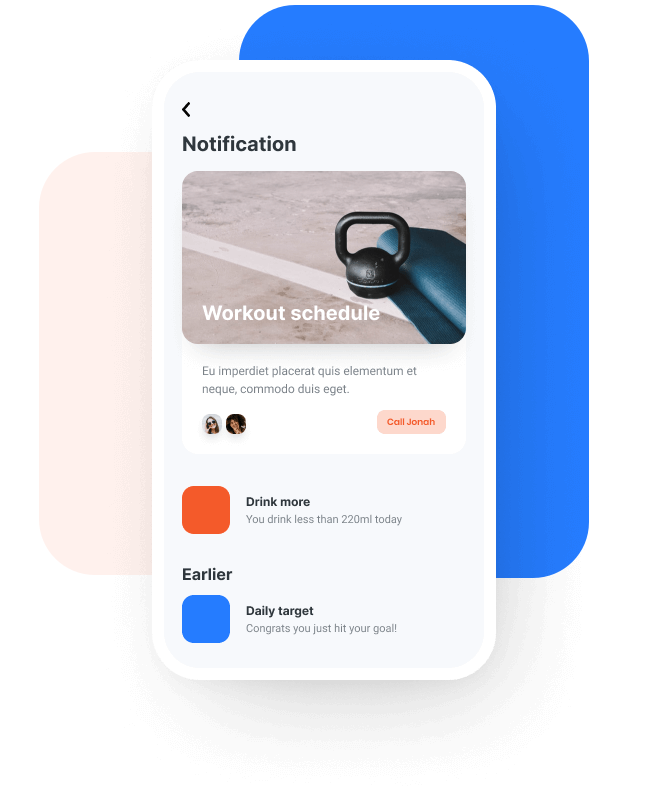
SMART NOTIFICATION​

Never miss your fitness routine.

Proin massa odio amet tellus dignissim condimentum in viverra eget rhoncus, adipiscing eget ut donec vel enim, ultrices vestibulum nisl vel blandit dui enim hac sed a at laoreet eget sagittis dictum.
Personalized style​

Neque lacus nunc, vitae fames mattis proin dictum blandit quam.​

Workout with friend​

Neque lacus nunc, vitae fames mattis proin dictum blandit quam.​

Tracking & progress​

Neque lacus nunc, vitae fames mattis proin dictum blandit quam.​

Fun & competitive​

Neque lacus nunc, vitae fames mattis proin dictum blandit quam.​

Music you love​

Neque lacus nunc, vitae fames mattis proin dictum blandit quam.​

Personalized diet menu​

Neque lacus nunc, vitae fames mattis proin dictum blandit quam.​

FITNESS COMMUNITY​

A caring fitness community
to help you stay on track.

Nibh amet feugiat ornare leo morbi euismod pellentesque duis id eu viverra ipsum est, et scelerisque quisque feugiat condimentum morbi mi massa dis vitae.

K+
ACTIVE USERS
K+
TOTAL DOWNLOADS
+
FITNESS VIDEOS
K+
DIET MENUS

Clear examples do more than decorate an explanation: they show how an idea behaves under recognizable conditions. In education and software documentation alike, strong illustrations begin with a defined goal, then reveal the steps, assumptions, and result without unnecessary detail. A practical test example should state the input, expected output, and boundary condition, because these elements show whether a rule works beyond the simplest case. Including a contrasting case also helps readers distinguish a valid application from a tempting but incorrect one, while concise notes explain why the outcomes differ. When examples are updated with current data and checked against the underlying rule, they remain useful across classrooms, product guides, and professional training.

Well-designed examples do more than illustrate a definition: they show how an idea behaves under realistic conditions. In technical writing, a strong example states its assumptions, inputs, and expected result, helping readers distinguish a general rule from a special case. A test case with explicit values and acceptance criteria makes the link between theory and practice clear, while edge cases show where the rule stops applying. Good examples also vary in difficulty, moving from a familiar scenario to a less obvious application without changing the underlying principle. Tables, diagrams, and brief annotations can clarify comparisons, but they should support the explanation rather than replace it. The most effective examples remain concise, verifiable, and close to the reader’s task, encouraging accurate application rather than passive recall.

Examples are most effective when they clarify an abstract idea without replacing the explanation itself. In teaching, a carefully chosen case should show the governing principle, reveal the steps behind a result, and remain simple enough for readers to examine. A short test example in a mathematics lesson can expose where an equation changes under new assumptions, making the distinction between a rule and its application visible. The strongest illustrations also acknowledge limits, since one case cannot represent every culture, industry, audience, or operating condition. Comparisons add further value: placing a typical case beside an edge case shows which features are essential and which depend on context. Editors and educators should therefore select examples for accuracy, relevance, and explanatory reach rather than novelty alone, then update them when evidence, technology, or public understanding changes.